WSID

blog

Stylized rocket labeled “WSID Beta” launching from a laptop screen with confetti, checkmarks, and question marks in the background

WSID Beta Launch: Help Us Build the Future of Clarity

We have exciting news for the 7 people who’ve read the blog!  😜 We’ve been working on WSID for a while now. There have been hiccups, setbacks, and plenty of late-night debugging. But we’re finally re-releasing the beta and inviting early users to help us shape what comes next. It’s more of a soft launch because no one knows about it (and no one cares... yet). But hey, that’s how legends start.
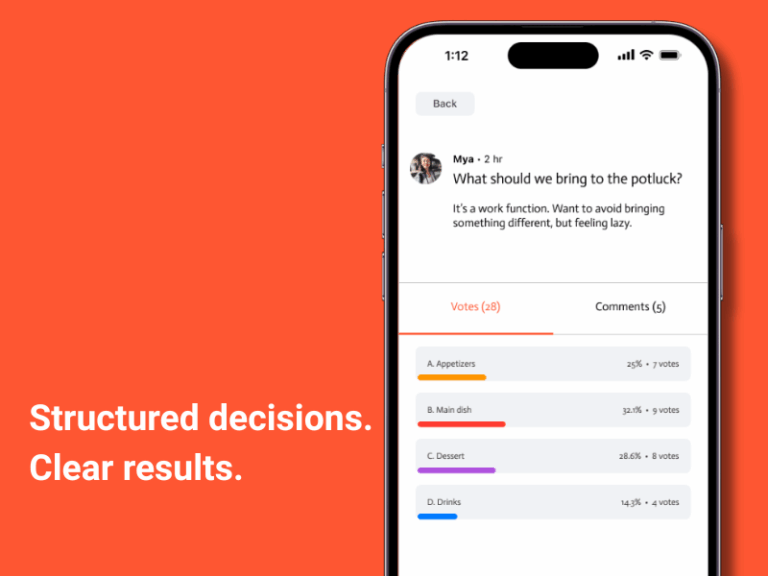
Mobile poll asking ‘What should we bring to the potluck?’ with vote percentages for appetizers, main dish, dessert, and drinks on a bright orange background

From Chaos to Clarity: Why WSID Chose Polls Over Feeds, and Text Over Emojis

In a world of infinite scroll and emoji reactions, WSID took a different path. We didn’t build just another social feed. We built a decision engine. At the heart of WSID is a simple but powerful format: structured questions, concise descriptions, and 2–4 pointed choices. This isn’t just a UX preference—it’s a philosophical stance. The polling feature isn’t a gimmick or a byproduct of the site—it’s the foundation. We believe clarity isn’t optional. It’s the point.
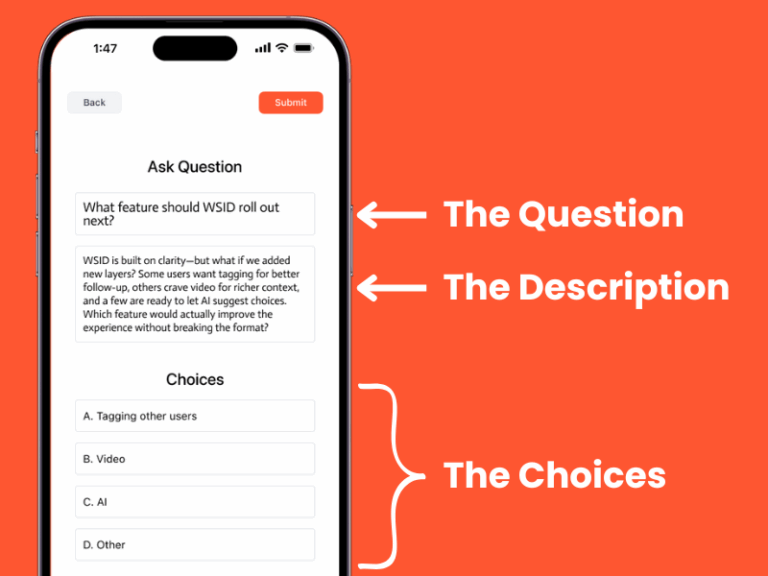
Smartphone screen showing a WSID question structure with title, description, and multiple choice options about platform features

The Anatomy of a WSID Question: How Structure Sparks Better Insight

In a world of endless comment threads, random hot takes, and doomscrolling, WSID offers something different: structured clarity. Every post on WSID is built around a question – but not just any question; one with context, intention, and choices. This structure isn’t accidental. It’s what makes WSID a social platform for people who want more than noise. In this post, we’ll break down the anatomy of a WSID question, and why it matters.
Illustration showing five doors labeled with human behaviors—criticize, gossip, get involved, encourage, help—highlighting how people tend to choose passive or negative actions over proactive ones.

The Paradox of Choice: Why More Options Leave Us Stuck

In a world overflowing with options, making a decision should feel empowering. But often, it feels overwhelming. Whether you're choosing a career path, a dinner spot, or a meme format, too many choices can lead to indecision, stress, and second-guessing. This idea is called the "Paradox of Choice," a term made popular by psychologist Barry Schwartz in his book The Paradox of Choice: Why More Is Less. In short, Schwartz explains that having lots of choices might seem great, but it can actually make us feel less happy and more anxious.
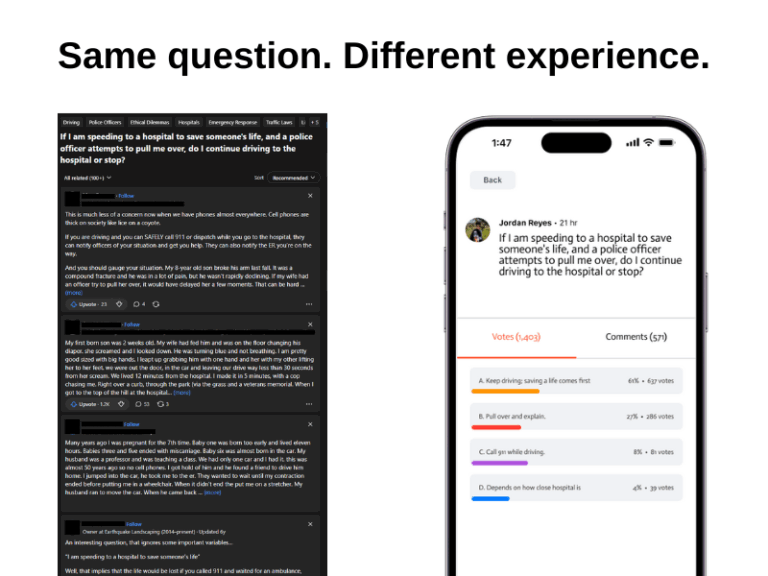
Side-by-side comparison of a Quora post and a WSID poll. The Quora post shows a long comment thread responding to a moral dilemma about speeding to a hospital. The WSID side shows the same question formatted as a multiple-choice poll with voting results and concise comments.

What Should I Ask on WSID? 10 Question Types That Work Best

WSID is built around one simple idea: ask clearly, answer easily. Every post on WSID is a question that jumpstarts a conversation. Unlike most social media, where users can post a random picture or sentence and receive reactions, WSID requires the asker to think a little more critically. This requires more effort, but that effort pays off. Narrowing the choices helps narrow the scope and brings clarity to the conversation. But not every question works equally well on a structured poll-based platform. So what does work best?
Silhouette of a person surrounded by digital icons, with a WSID poll on quitting a job displayed below and the phrase “Results. Not noise.”

WSID vs. Traditional Social Media

Traditional social media is a mess. Between endless comment threads, vague likes, and algorithmic guesswork, it’s easy to feel overwhelmed, unheard, or annoyed. And let’s not forget the trolls and keyboard warriors who thrive on provoking others because they find little joy in their own lives.