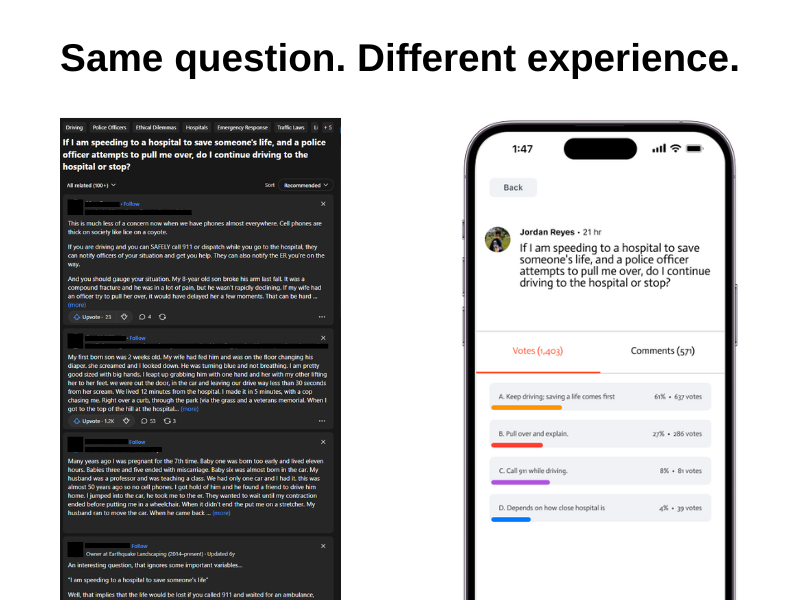
WSID is built around one simple idea: ask clearly, answer easily. Unlike most social media, where users can post whatever and receive reactions, WSID requires the asker to think a little more critically. Every post is a question that jumpstarts a conversation. Crafting a question with multiple choices takes a little extra effort, but that effort pays off. Narrowing the choices helps narrow the scope and brings clarity to the conversation. But not every question works equally well on a structured poll-based platform. So what does work best?

Here are 10 types of questions would work well on WSID, each designed to spark engagement, deliver clarity, and help decisions without the chaos of comment threads.
1. Decision Questions
What they are: Personal or practical choices that need input
Why they work: Clear stakes, emotional nuance, and a need for structure
Examples:
-
Should I move in with my partner?
-
Should I take the job offer or wait for something better?
-
Should I buy a car or keep using public transit?
Decision questions help users weigh options with clarity and confidence. They’re ideal for moments when the stakes feel personal and the path forward isn’t obvious.
2. Opinion Questions
What they are: Questions that gauge sentiment or perspective
Why they work: They invite reflection without spiraling into debate
Examples:
-
Is it okay to take a mental health day without telling your boss?
-
Do you think tipping culture has gone too far?
-
Is it inconsiderate to take phone calls on speaker in public?
Opinion questions offer a window into how others think and feel, and are great for sparking thoughtful dialogue.
3. Would You Rather Questions
What they are: Lighthearted comparisons between two or more options
Why they work: Quick to answer, fun to scroll, great for dashboard engagement
Examples:
-
Would you rather have a pet dragon or a pet unicorn?
-
Would you rather always have perfect hair or perfect skin?
-
Would you rather travel to the past or the future?
These questions bring levity and playfulness to the platform. They’re perfect for boosting engagement and keeping things fun.
4. A/B Testing / Marketing Questions
What they are: Creative or strategic comparisons
Why they work: Perfect for creators, marketers, and founders
Examples:
-
What should I name my YouTube channel?
-
Which logo feels more trustworthy?
-
Which homepage layout feels more inviting?
A/B testing questions turn feedback into actionable insight. While not scientific, they’re a smart way to validate creative choices with data.
5. AITA (Am I the Asshole) Questions
What they are: Moral or social judgment calls
Why they work: Familiar format, but WSID adds structure and transparency
Examples:
-
AITA for not participating in my friends “scheme” to convince a restaurant to buy his ketchup?
-
AITA – Do not want a service dog to participate in my wedding.
- AITA for charging client full price for massage after a poop accident and she left for half hour?
AITA questions tap into shared values and social norms. They’re compelling because they ask users to weigh fairness and empathy.
6. How-To Preference Questions
What they are: Asking for preferred methods or strategies
Why they work: Delivers practical insight without overwhelming advice
Examples:
-
What’s the best way to prep for a job interview?
-
How do you stay focused while working from home?
-
What’s your go-to method for budgeting each month?
These questions can reveal useful strategies from real people. They’re ideal for learning what works in everyday life and figuring out what works best for you.
7. Lifestyle Planning Questions
What they are: Exploring how others spend time, money, or energy
Why they work: Helps users recharge, reflect, and discover new ideas
Examples:
-
What’s the best way to spend a solo weekend?
-
How do you plan your meals for the week?
-
What’s your ideal morning routine?
Lifestyle questions help users optimize their routines and explore new possibilities. They’re great for sparking inspiration and self-care.
8. College & Career Questions
What they are: Navigating academic or professional decisions
Why they work: High-stakes choices benefit from community input
Examples:
-
Should I switch majors or stick it out?
-
Should I go to grad school or start working?
-
Should I accept the internship or wait for a full-time offer?
These questions help users navigate pivotal life decisions. They’re especially valuable for students and professionals seeking clarity.
9. Mental Load Questions
What they are: Offloading indecision or emotional overwhelm
Why they work: WSID turns chaos into clarity with structured options
Examples:
-
What should I tackle first this week?
-
How do I prioritize my to-do list when everything feels urgent?
-
What’s the best way to reset after burnout?
Mental load questions offer relief and direction. They’re perfect for users who feel stuck or overwhelmed.
10. Civic & Advocacy Questions
What they are: Engaging users in public or community issues
Why they work: Encourages thoughtful participation without polarizing threads while allowing users to back their opinions
Examples:
-
Should my town ban single-use plastics?
-
Should voting be mandatory in local elections?
-
Should the city build more protected bike lanes?
These questions invite civic engagement and collective problem-solving. They’re ideal for users who want to make a difference.
🧭 Final Thoughts
WSID isn’t just about asking for advice or sharing opinions; it’s about creating clarity through structured questions. Whether you’re asking about your weekend plans or your next big move, the right question type makes all the difference. Structured polls, transparent comments, and real-time results turn opinions into insight.